 Block Paving
 Paving Slabs
 Permeable Paving
 Retaining Walls
 Facing Bricks & Walling
 Kerbs & Edging
 Steps
Steps
0 products added
Products
Back



From the Ancient Romans’ innovative and sophisticated drainage systems to the extensive network of underground sewers, pumping stations and treatment facilities developed in London during the Industrial Revolution, our ancestors have been thinking about managing rainfall and surface runoff for centuries. The advent of SuDS marks the evolution of our efforts to cope with our increasingly wet climate.
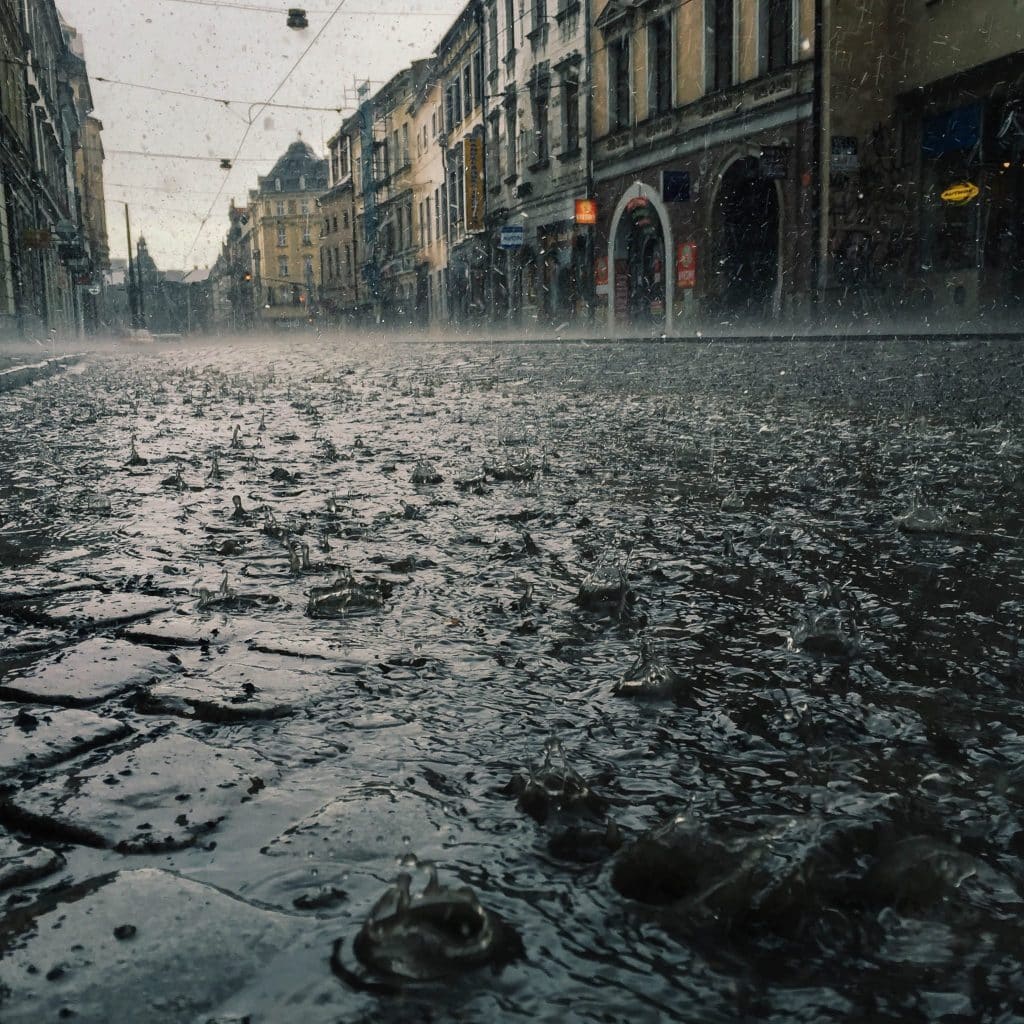
Throughout September 2024, the UK was hit with repeated weather warnings and, more than once, a month’s worth of rain fell in just a few hours, resulting in widespread flooding.
To help mitigate the risk from these types of severe weather events, governmental planning guidance throughout the UK strongly encourages the use of Sustainable Drainage Systems (SuDS) on all developments wherever possible. Despite this, many local authorities cite ‘cost savings’ as a reason for prioritising schemes that utilise Dense Bitumen Macadam (DBM), tarmacadam (tarmac) or Asphalt Concrete roads and pavements over permeable paving, one of the most effective, low-maintenance SuDS solutions available. Let’s take a look at the benefits of permeable paving and examine whether the costs really add up for tarmacadam.
The State of the UK Climate report found that UK winters are getting wetter and summer rainfall intensity is increasing. Alongside this, increased urbanisation, and the use of hard surfaces in infrastructure and construction, make it difficult for water to be absorbed by the landscape. Consequently, water is directly channelled through a network of pipes and sewers into water systems. This traditional type of drainage system can often become overwhelmed during intense rainfall periods.

Sustainable drainage systems are not just drainage, they represent an integrated way to manage rainfall that does away with drain pipes. SuDS mimics the natural behaviour of water in a given landscape and offers a multitude of benefits to housing developments and road systems. In summary, it is an effective rainwater management system with pollution control at the source that supports a controlled flow of clean water through the environment.
A well-designed SuDS is an integrated system, you simply can’t see it. The invisibility is why it can contribute hugely to the landscape character of almost any housing development.
Gordon Leitch, Team Leader (Consultancy) for Roads & Transportation at Inverclyde Council.
Essentially with a SuDS solution, water drainage is managed in such a way that the runoff is collected, stored, and cleaned before being released slowly back into the environment. This both reduces the risk of flooding and benefits the local biodiversity.
In England and Scotland, the Flood and Water Management Act of 2010 focuses on flood management rather than defence, and the National Planning Policy Framework was amended to require the delivery of SuDS for major developments where appropriate. As a result, Local Planning Authorities must ensure SuDS are put in place for developments of 10 dwellings or more (or the non-residential equivalent) unless it can be demonstrated to be inappropriate. In Wales, SuDS schemes are mandatory on all developments with a construction area of over 100m2.

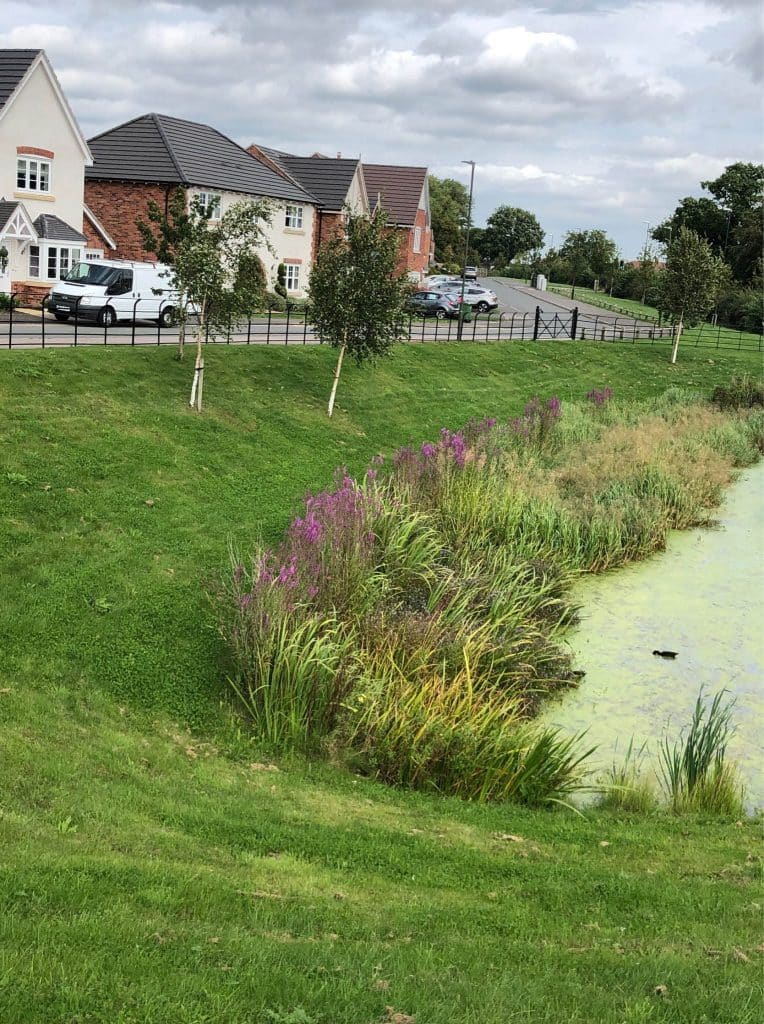
There are a variety of different SuDS devices available including soakaways, filter strips, swales, bioretention areas, infiltration or detention basins and permeable paving. The most appropriate option depends on the site. Permeable paving is generally a preferred option for developers because it allows for the inclusion of vital road infrastructure and hard landscaping alongside green spaces.
Permeable paving is an effective SuDS device that slows and filters water at the source by trapping and breaking down harmful pollutants within the stone. Depending on the site conditions, rainwater is allowed to either drain into the ground or attenuate and release slowly into secondary drainage systems.
Gordon Leitch, Team Leader (Consultancy) for Roads & Transportation at Inverclyde Council:
There is incredible value in design with permeable paving. For example, multiple permeable paved car parking facilities with flow controls can create a whole area of a housing development that is effectively taking care of itself. The water is cleaned, stored and released into the environment in a controlled manner to help maintain the existing landscape.
This was demonstrated at the Rainey Endowed School where the Department of the Environment’s Pollution Prevention Department allowed Magherafelt Council to introduce 1,500 gallons of polluted water into the playground as part of a school science experiment.
Data-loggers, flow meters and temperature gauges were installed in the stone sub base and water samples were taken at various points in the system to test for pollutants.

Within one hour, the SuDS system had removed more than 90% of hydrocarbons and heavy metal pollutants.
Permeable paving is multi-functional and can be used for roads, driveways and pedestrian areas. It can be used as part of a wider scheme or as a standalone solution. This can be appealing given the complexity of maintaining other SuDS solutions. Though of course, local authorities’ budgets are limited, so specifiers will still need to ensure that the costs are feasible.

If you simply compare the material cost of tarmac against permeable block paving,then those solutions will always be cheaper. However, when looking at the whole installed systems the reality is somewhat different.
This can be demonstrated when you compare the costings for installing the SuDS system at the Rainey Endowed School project mentioned above against a typical tarmac system.
Rather than simply comparing the finishing material, local authorities and developers need to look at the cost of all the materials and labour needed to construct the road or hard landscaping solution. For example, when looking at a road, drainage elements, such as excavation, pipework, manhole covers and gullies, are essential for tarmac road construction but are not required for permeable paving. This means that the total cost can typically be around 10-15% lower for a road built using a permeable paving SuDS scheme than it is for a tarmac solution.


We often speak of the cost of SuDS. A well-designed SuDS system is cost-effective when compared to the traditional drainage system. There is less material required, the lifetime maintenance cost is low and if sub-catchments are well utilised, there will be effective water storage available that can help reduce flooding in the surrounding area for years to come.
This ‘futureproofing’ element is important to consider when factoring costs. Remember, the Met Office predicts that rainfall will continue to increase in intensity. So, it’s worth questioning whether the drainage system proposed for a tarmac system will cope if a month’s worth of rain falls in just an hour.
Will larger (and potentially more costly) diameter pipework be required to cope with sudden surges in volumes of water? If this isn’t considered, what will be the cost of the post flood clean-up to the local authority and the risk to the wider community, including homeowners and businesses? And how would this impact biodiversity?

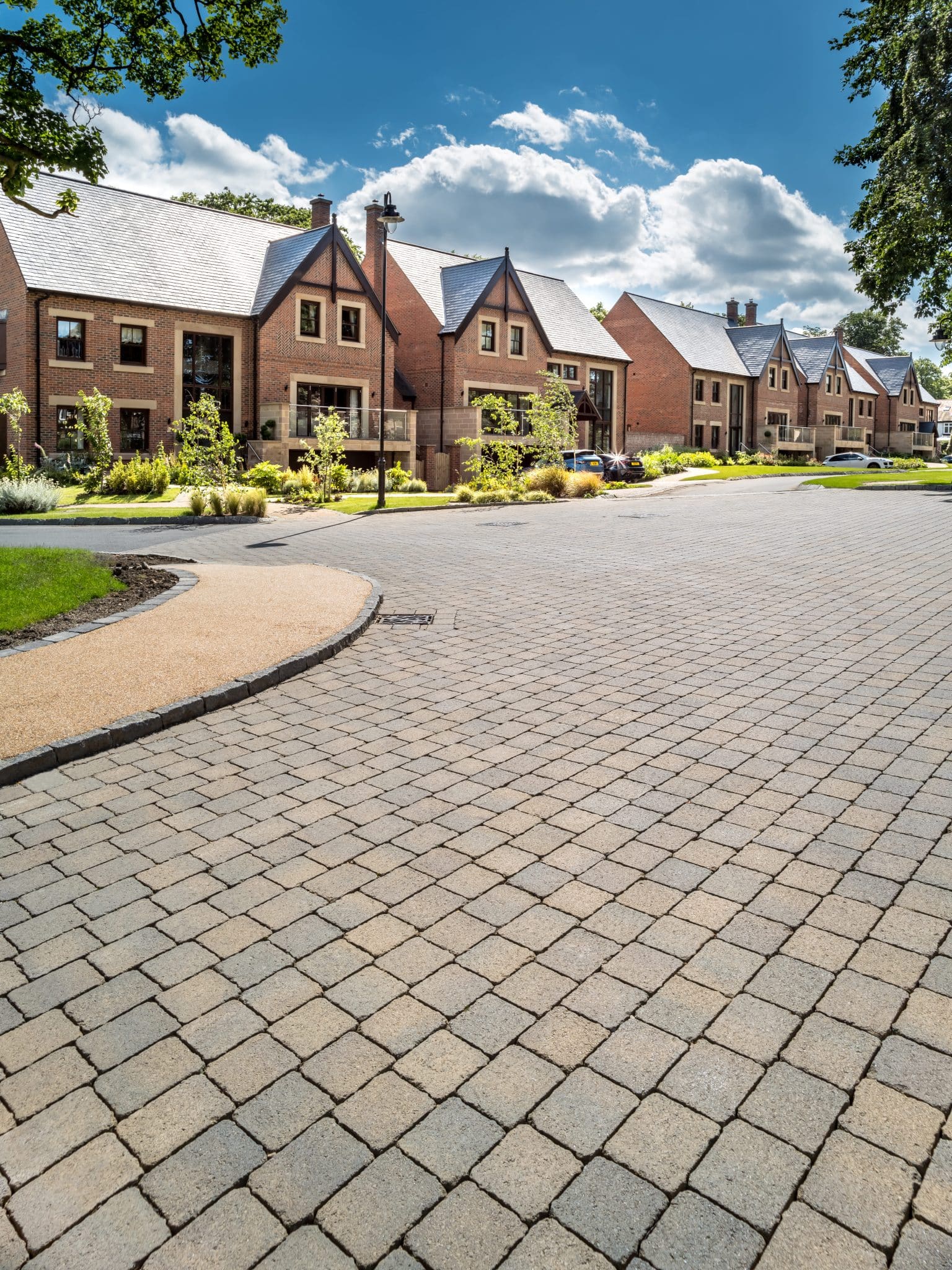
Although permeable paving has nibs, the gaps between the paving that allow water to flow down in between the blocks and infiltrate the ground below, it is virtually indistinguishable from standard block paving. An example of this is the University of Gloucestershire’s Pittville Student Village where permeable paving was installed next to standard block paving. This demonstrates how design consistency can be achieved between permeable and non-permeable areas.

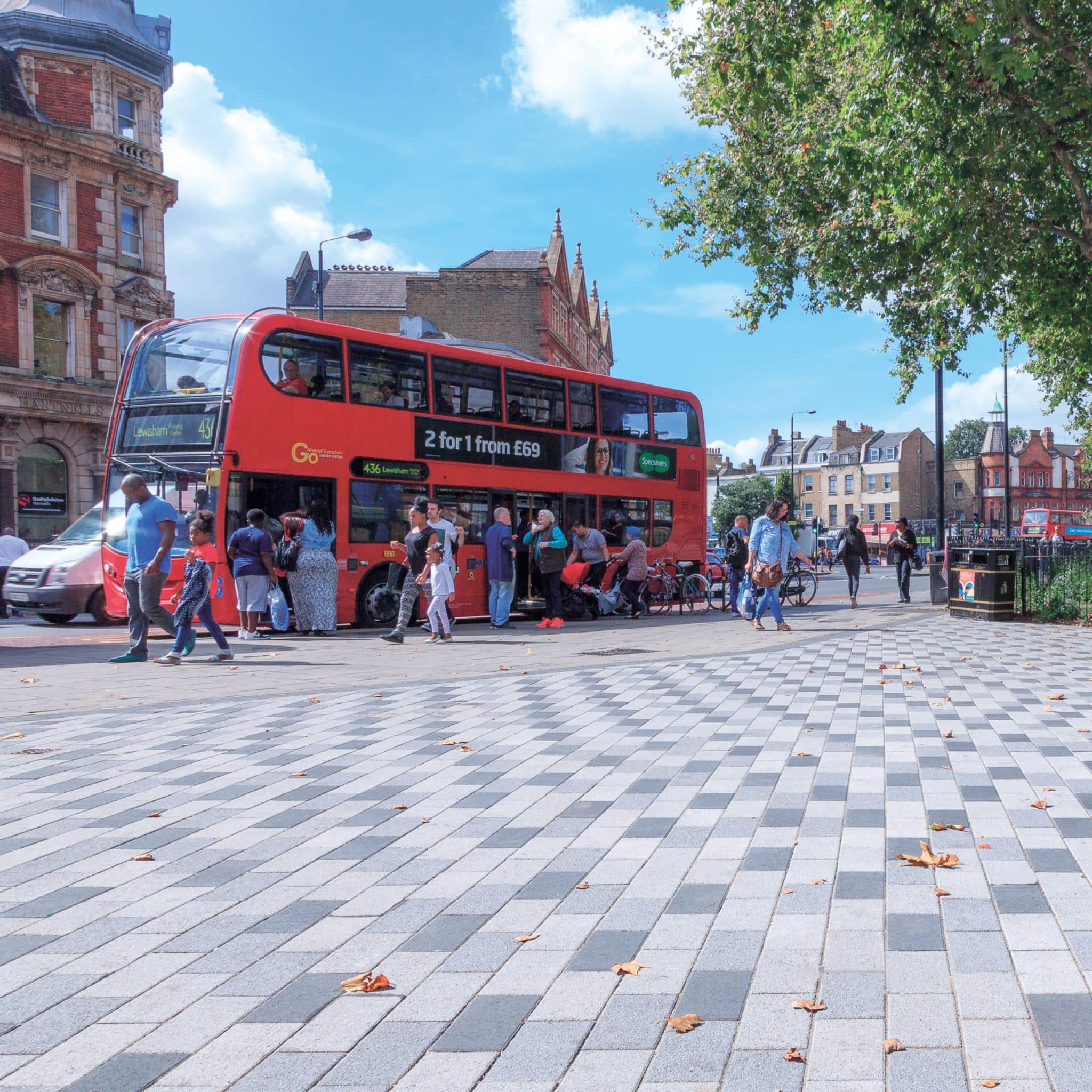
It comes in a variety of colours and surfaces, including surfaces designed to reduce the risk of slips and skids. Designers can use it to create attractive hard landscaping and by following good design principles can also ensure spaces are accessible. For example, shiny surfaces such as tarmac can look wet. The high contrast between materials such as tarmac and paving can give the impression of uneven surfaces, while changes in pattern can be confusing for people with mobility issues. Using plain designs or blended tones with permeable paving allows the designer to create striking designs, while also ensuring the space is suitable for everyone.

Tarmac is traditionally seen as the low-maintenance option, but is that really the case? The asphalt itself may be easy to repair, but when the regular gully cleaning that’s required to keep drainage free from debris is factored in, permeable paving requires very little maintenance in comparison.
Permeable paving constructed with clay, natural stone or concrete blocks should be designed to BS 7533-13:2009. As with any hard landscaping material, user-led design, quality installation and maintenance are key to preventing failure and the likelihood of trip hazards. Manufacturer’s joint void width percentages should be followed to ensure that the correct grit grading is achieved as this will maximise drainage flow rates and reduce the amount of maintenance required.
In fact, while the permeable paving nibs will gradually clog up over time, research by Dr Sonke Borgwart demonstrates that even after 15 years without maintenance, it will still allow approximately 400mm of water to drain per hour. This exceeds the 100mm per hour of rainfall that is likely to be experienced during an extreme storm in the UK.

Sadly, the climate crisis means extreme weather is getting more frequent and it’s clear that budgets will remain tight for the foreseeable future.
So, when you consider the unique combination of SuDS drainage, cost savings, design aesthetics and reduced maintenance offered by permeable paving, it is hard to justify the continued use of tarmac for roads and pavements.
To find out more, sign up for our CPD ‘How permeable paving works as a SuDS solution’ which covers everything you need to know to design a permeable paving SuDS scheme as well as including information about common challenges, maintenance and adoption.

Our permeable paving design service provides you with site-specific prelim designs that show the sub base requirements for Tobermore’s Hydropave range, making planning consent straightforward. Fully indemnified paving designs are available for the construction stage, saving you time and money on your SuDS project.