 Block Paving
 Paving Slabs
 Permeable Paving
 Retaining Walls
 Facing Bricks & Walling
 Kerbs & Edging
 Steps
Steps
0 products added
Products
Back



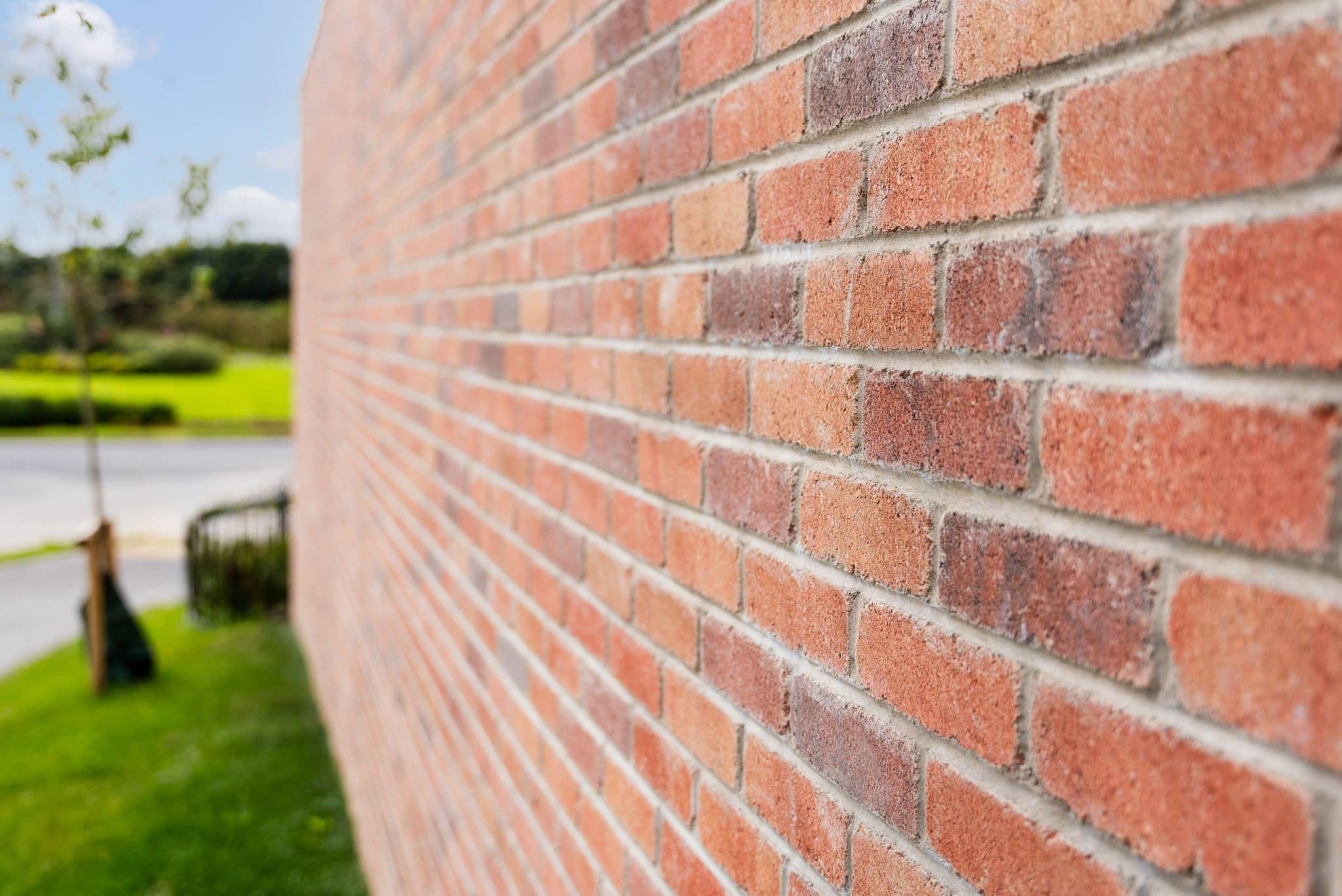
Mortar binds concrete facing bricks together. However, it does more than just act as an adhesive. It provides a bearing pad for the facing bricks, fills gaps, and provides an important barrier to the passage of moisture. On this last point, selecting the correct mortar class for the application is not the only factor in forming a suitable moisture barrier – using the correct mortar joint profile is just as important.
Whilst different mortar joints can give a wall made of concrete facing bricks a different aesthetic, some may not be appropriate where high exposure to rainfall is likely. In this blog, we will look at some of the different types of mortar joints that can be used and which should be used to enhance the weather protection of the finished wall.
To get the optimum finish on mortar joints, the concrete facing bricks should be laid on a full bed of mortar with all joints filled. The specified joint profile should be formed after leaving the mortar to harden slightly.
Tooling is recommended to compact the joints, improve weather resistance, and reduce shrinkage in the mortar. Joints should be finished depending on the overall visual effect and weathering performance required. It is vital that all horizontal and vertical joints are compacted and free from voids. Shell bedding should not be used.
Recessed or flush pointing is not recommended in areas with high-exposure to moisture. We shall now explore the mortar joint profiles in more detail to see how their shape affects their suitability to form an effective barrier against water ingress.

The joint profiles of mortar in concrete facing bricks make up approximately 17% of the overall wall area, and different joint profiles can affect both the aesthetics and weathering properties of the wall.
The surface shape and depth of different mortar joints affect their water resistance and aesthetics. As a general rule, a concave joint reduces water penetration through the joints, whilst raked joints increase the risk.
We will look at six mortar joints in more detail.
This is the most common joint used in masonry construction. The tooling works the mortar tightly into the joint between the facing bricks to form a tight seal that gives this joint its strong water resistance. The brick pattern is emphasised with a concave mortar joint, and small irregularities in laying are concealed.
The Vee joint is similar to the concave joint but has a sharp V-shaped indentation, giving it a more dynamic and modern appearance. It’s a popular choice for contemporary designs, offering a sleek and stylish finish to brickwork.
A flush mortar joint is level with the brick surface and is typically used when walls will be plastered or painted, requiring extra care to make it watertight.
The weathered (or struck down) joint tapers inward at the top, creating a shadow line and promoting water runoff. Commonly used horizontally, it dates back to the 19th century. While effective, poor execution can lead to shrinkage and water seepage.
The struck mortar joint, used horizontally, tapers inward at the base (struck up), opposite to the weathered joint. It’s mainly used for interior walls as it allows water to sit and seep in if exposed. Originating in the 15th century, it was designed to mask irregular bricks by creating one straight edge and blending the mortar into the other.
This mortar joint strongly emphasises horizontal joints. It incorporates a ledge to create the horizontal lines, and this ledge will collect rainwater as it runs down the wall. This makes it a very poor weather joint, so it is not recommended for external walls exposed to the elements.
Here is a summary table for mortar joint profiles with an outline of their water resistance and typical use.
| Type of mortar joint | Water resistance | Used for |
|---|---|---|
| Concave/bucket handle | Good | Exterior walls |
| Vee | Good | Exterior walls |
| Flush | Average | Interior walls or exterior walls that will be rendered |
| Weather | Average | Suitable for some exterior walls |
| Struck | Poor | Interior walls |
| Raked or recessed | Poor | Interior walls |
Making a choice of mortar joint profile for housebuilders is a combination of ensuring the profile selected will provide the required level of weather resistance, whilst helping enhance the aesthetic appeal of the completed dwellings. The latter can be hard to visualise. Obtaining sample facing bricks to see first-hand the impact of different mortar profiles on the overall appearance can add reassurance that the mortar profile/facing brick combination fits the overall project aesthetic.
We recognise that housebuilding provides its own unique set of challenges. That’s why we have dedicated, intuitive tools & services to make housebuilding easy.

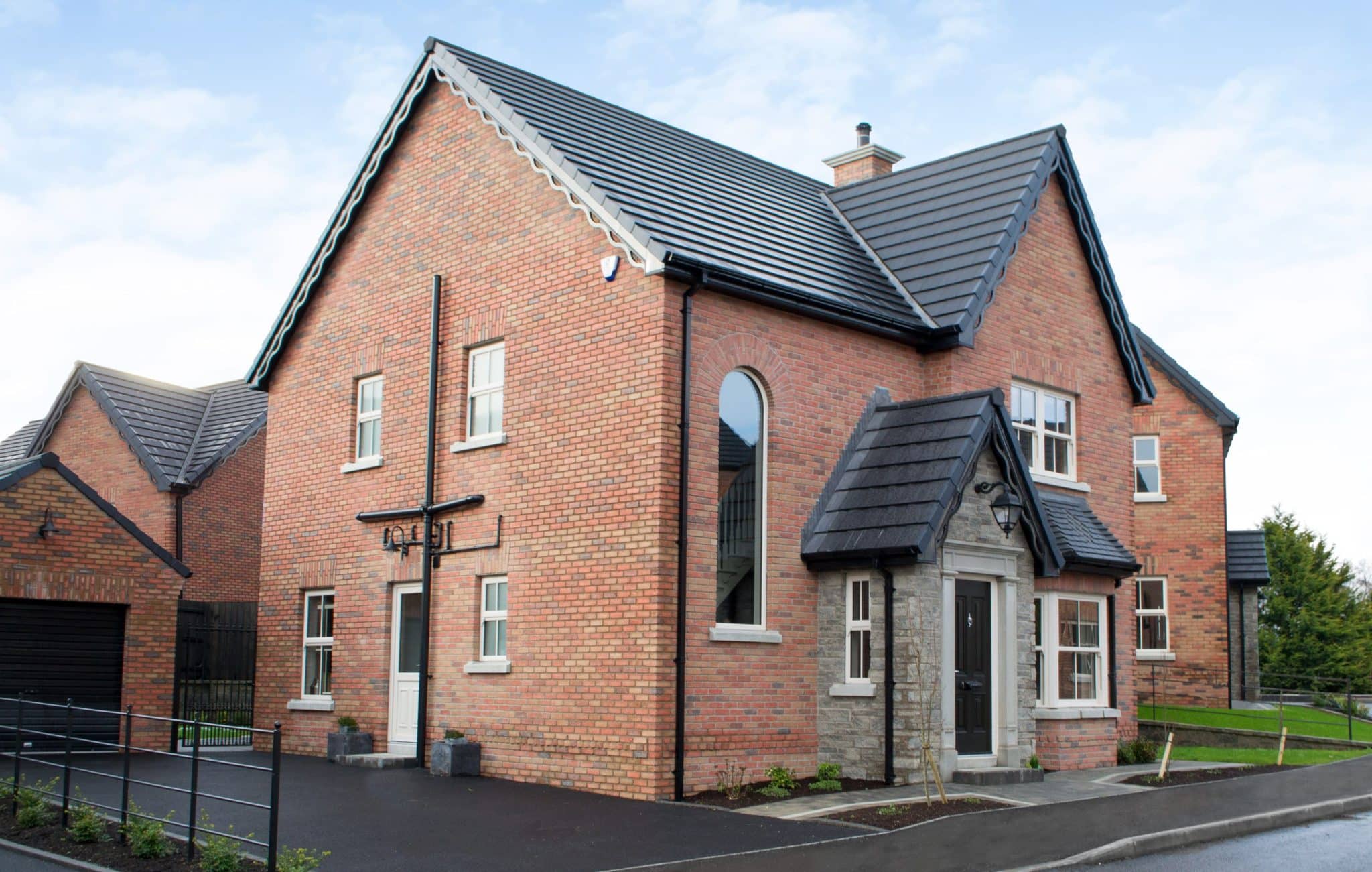
Tobermore has a range of rustic and contemporary concrete facing bricks, including Kingston and Lansdowne, as well as Country Stone in our walling range. Given the final proportion of a facing wall that will comprise the mortar, we make sure we advise customers on the best mortar joints that will be suitable for their projects.
Craig McBride, Tobermore’s Technical and Product Training Manager, explains more:
“Tobermore concrete facing bricks produce stunning walls to enhance the aesthetics of housing developments. The type of mortar joint can play a big role in complementing the finish of our facing bricks and adding to the weather resistance of the finished wall. Our literature contains advice and guidance on best practice techniques, and we have an experienced team who can give practical advice on-site. Dry swatches are available across the ranges to help with visualisation of the finished projects. We can now send sample panels of our facing bricks to the site, so our customers can get hands on experience of creating mortar profiles that match the project’s visual and performance requirements.”
If you have a project and would like to get a closer look at our range of concrete facing bricks and try out some mortar profiles, you can request a sample wall from our sample service. If you have any questions on any aspect of our concrete facing bricks, including the best mortar to use, please contact our technical team who will be happy to help.

A single brick never tells the full story. This service allows housebuilders to request 60 of our concrete facing bricks to be delivered to site, enabling you to build a small-scale facing brick wall and giving you a better vision of how our concrete facing bricks would look on your projects.