 Block Paving
 Paving Slabs
 Permeable Paving
 Retaining Walls
 Facing Bricks & Walling
 Kerbs & Edging
 Steps
Steps
0 products added
Products
Back



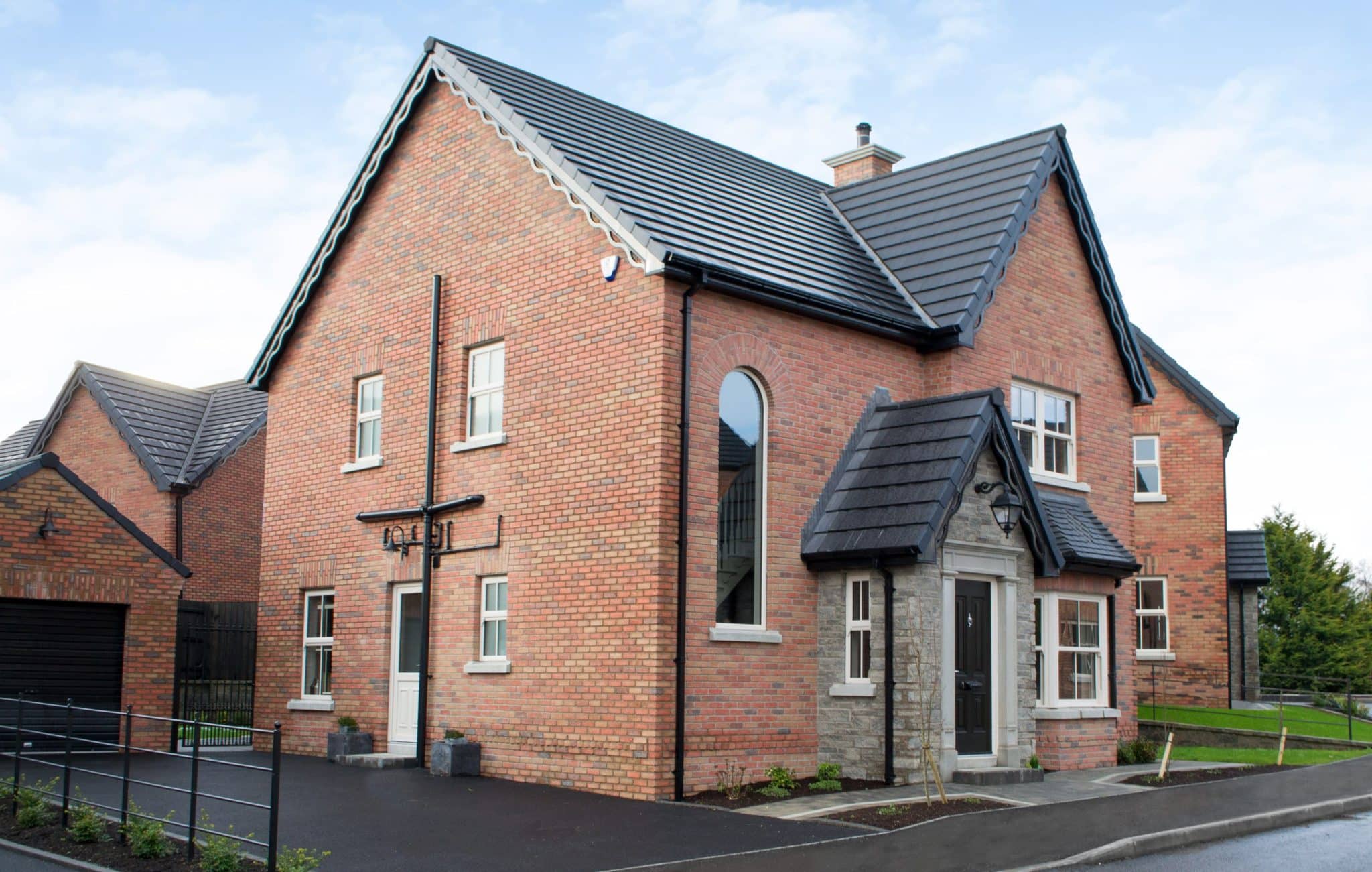
The best mortar to use for concrete facing bricks has the right amount of strength required to meet a project’s structural and durability performance. The strength of mortar is derived from its constituent parts and is expressed as its compressive strength value measured in Newtons per square mm (N/mm2).
For most applications where concrete facing bricks are used in facing masonry, a mortar that would be expected to achieve a compressive strength of 4 N/mm² is used. This is known as a mortar with a strength class of M4.
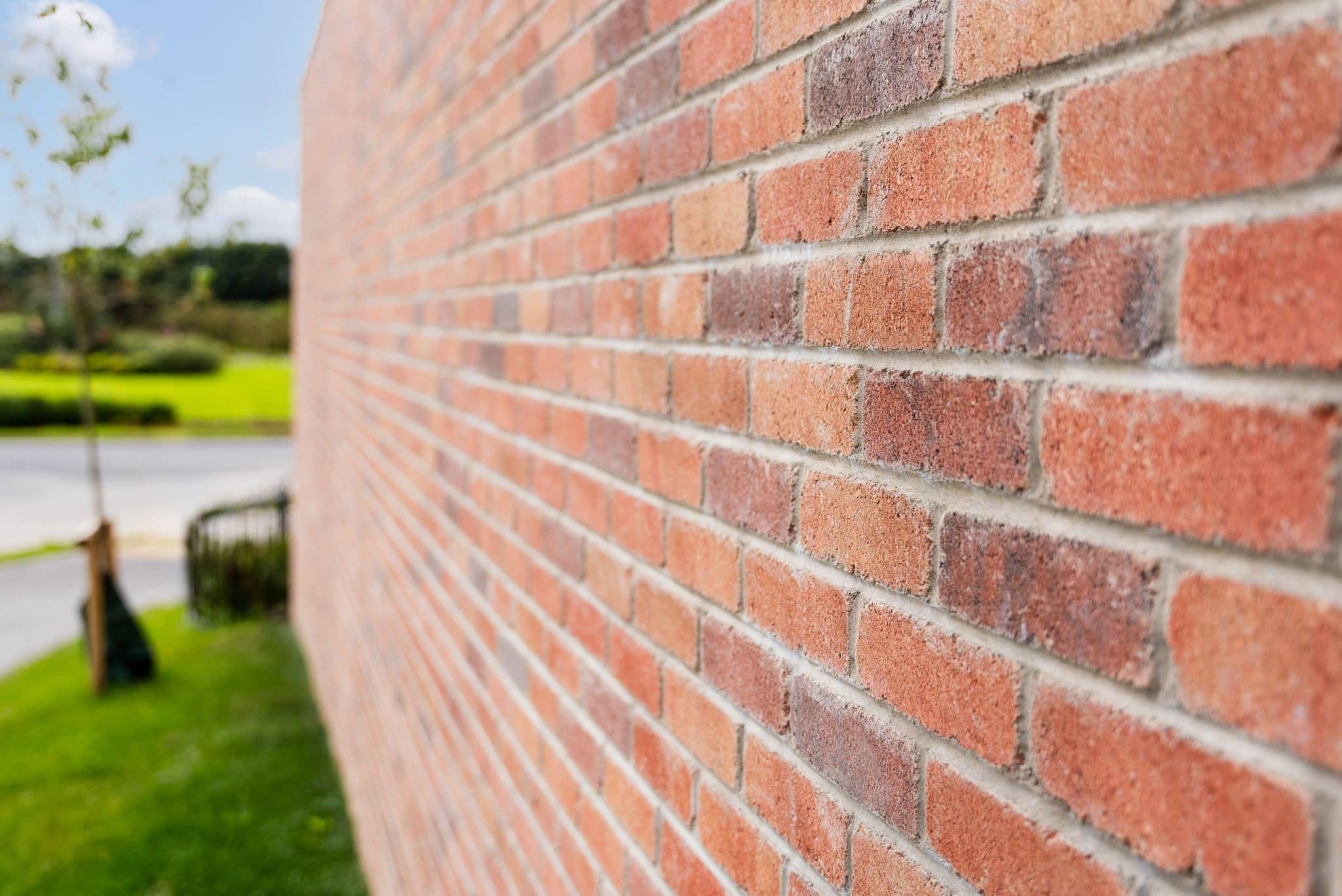
As mortar accounts for around 17% of facing bricks built in stretcher bond, it has a large part to play in the structural performance and the durability of the wall.
In this blog, we will look at how the composition of mortar affects its properties. Then we will explore which standards should be referenced for recommendations on the use of mortar with concrete facing bricks. Also, we will consider the strength requirements of concrete facing bricks and see how they may vary depending upon the conditions to which they, and the chosen mortar, are exposed.
A major part of the composition of mortar is sand and about one-third of the volume between the grains of sand is air space. The type of binder used to fill this space affects the mortar’s strength and physical properties. Using one part cement to three parts sand will fill all the spaces between the sand and result in the strongest mix. However, this will also be a coarse mix, have poor workability and will be the most brittle mortar once cured.
The mortar used for facing bricks needs to have good workability, flexibility and adhesion to the concrete facing bricks, and this can be achieved by including additives.
Adding lime to a mixture of ordinary Portland cement (OPC) and sand helps to improve the mortar’s workability. It also increases its flexibility, so it is better able to withstand movement from ground settlement or thermal expansion and contraction. The OPC is made of at least 95% clinker. This is referred to as a CEM I class of cement.
Masonry cement is made using Portland cement blended with supplementary cementitious materials, plasticisers and air entraining agents. These additional materials are designed to improve mortar performance in a similar way to lime and, in some cases, lime itself is one of the additives. The cement in this case is known as CEM II or a Portland composite cement, showing that it contains between 65% and 94% of clinker.
In both cases, the more lime or masonry cement that is added, the lower the compressive strength of the mortar class. However, the qualities required to produce a mortar best suited for facing bricks are enhanced, so there is balance to be found. Advice on this can be obtained from standards.
The table below shows the different mortar mixes that would be expected to achieve a compressive strength of 4N/mm² after 28 days and are suitable for use in environmental conditions classed as moderate.
| Mortar Class | Cement:Sand | Cement:Lime:Sand | Masonry cement:Sand (using an inorganic filler other than lime) | Masonry cement:Sand (using lime inorganic filler) |
| M4 | 1:5 to 1:6 | 1:1:5 to 1:1:6 | 1:4 to 1:5 | 1:3.5 to 1:4 |
There are circumstances where an M4 mortar may not be sufficient. These include where facing bricks are used near ground level or in earth-retaining structures. Always refer to the appropriate standards or seek advice from the manufacturers of the mortar and concrete facing bricks to ensure that the mortar you have specified will meet the required performance of your project.

There are many standards that apply to masonry and mortar, and here are two that are a good place to start.
PD 6697 provides information on the design, durability, and use of masonry, which was previously found in two (now withdrawn) British standards. Those standards were replaced by Eurocodes, but the useful information was not transferred across the new codes.
Table 15 of PD 6697 covers the selection of mortars for durability with facing bricks, and this is where the M4 class, quoted in the introduction to this blog, is derived.
Table 15 also dictates the required strength and frost resistance of concrete bricks. These factors are dependent on their position in the building—such as above or below the damp-proof course (DPC)—and their exposure to weather. We will look at this in more detail later in this blog.
Eurocode 6² is the European standard for designing masonry structures, including concrete facing bricks, that replaced the two aforementioned British standards. It includes a National Annex that provides specific values and parameters for use in the UK.
In structural applications, engineers should choose a mortar that, combined with the facing bricks, meets the required compressive, flexural, and shear strengths as specified in Eurocode 6.
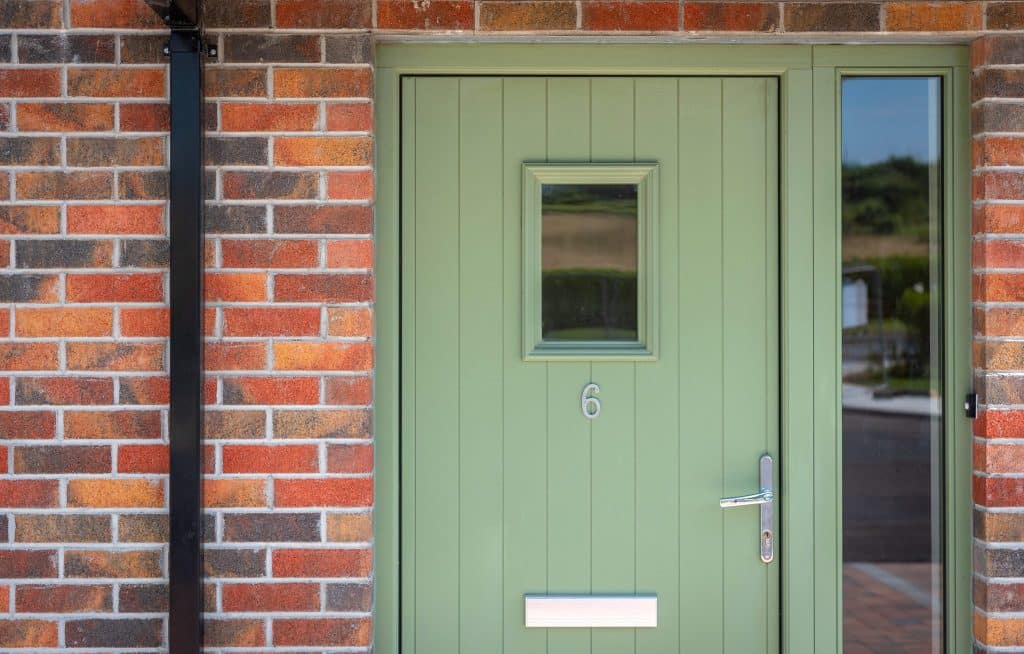
As well as selecting the most appropriate mortar, the compressive strength of the concrete facing bricks clearly plays a key part in the structural integrity and durability of the finished facing brick wall.
Approved Document A³ (Structure) of the building regulations requires that a building is constructed so that the combined loads are sustained and transmitted safely to the ground without causing any instability in any part of the building.
It addresses the use of concrete facing bricks under masonry units. It states that walls should be properly bonded and solidly put together with mortar and constructed of masonry units using concrete bricks conforming to BS EN 771-3⁴ – Aggregate concrete masonry units (Dense and lightweight aggregates).
Approved Document A gives the minimum compressive strength requirements for masonry units according to BS EN standards on page 24.
View UK Building Regulations – Approved Document A
Approved Document A gives the compressive strength of concrete facing bricks in each condition on page 23.
View UK Building Regulations – Approved Document A
If you are ready to elevate your next construction project, explore Tobermore’s selection of high-quality facing bricks today!
The minimum compressive strength of concrete facing bricks required to meet various durability classes is laid out in Table 15 of PD6697.
However, useful information is available from the LABC in Appendix C of their Technical Manual. It includes a comprehensive table entitled ‘Durability of masonry in finished construction (derived from PD 6697 – 2019).
The durability of a facing brick wall will depend upon the conditions to which it is subjected. Therefore, concrete facing bricks near ground level that will experience a high risk of water saturation with freezing need to have a higher compressive strength (22 N/mm²) than those with a low risk (16.5 N/mm²).
The guidance also includes a table explaining the classification of micro conditions of completed masonry on page 481. This is reproduced from Eurocode 6.
View the LABC Technical Manual.
The array of standards and regulations governing the choices of mortar, coupled with the need to specify concrete facing bricks with the correct compressive strength, can make the specification process unduly confusing. Consulting manufacturers of concrete facing bricks should help to smooth this process, as they are well placed to advise on the specifications needed and compatibility with mortars as well as practical installation advice.
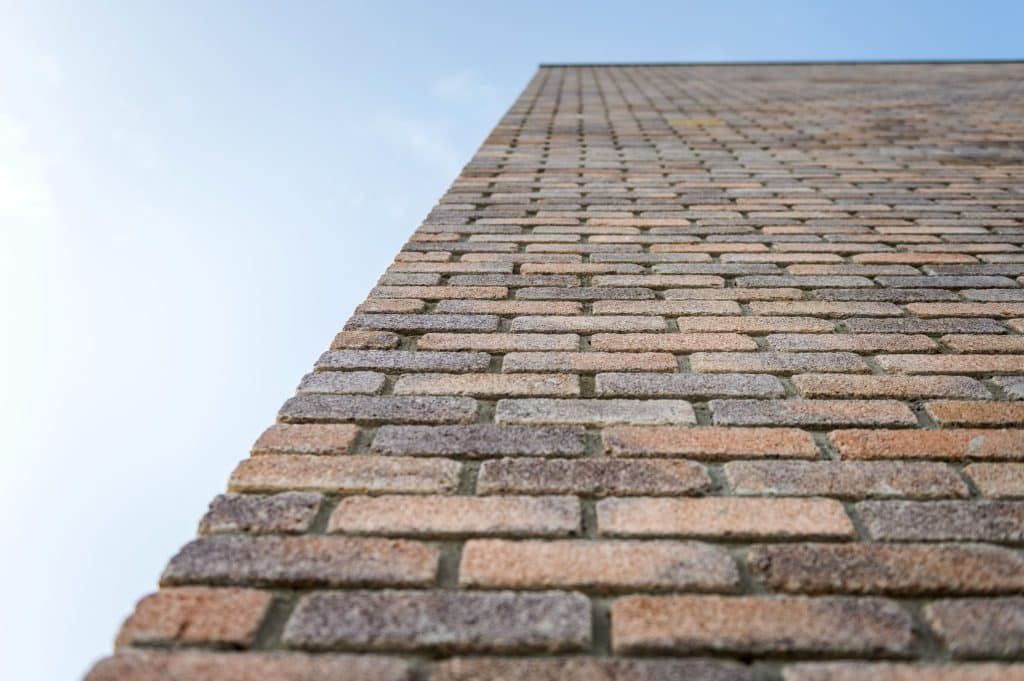
Tobermore has a range of rustic and contemporary concrete facing bricks, including Kingston and Lansdowne, as well as Country Stone in our walling range.
Craig McBride, Tobermore’s Technical and Product Training Manager, comments on the importance of mortar selection:
“We ensure that all our concrete facing bricks meet or exceed the minimum strength requirements of the Building Regulations, and the team is familiar with all the standards and guidance documents relating to the most appropriate mortars to use in any given situation. We are always on hand to offer advice and guidance on mortars to our customers. In this way, we can help deliver robust and durable walling using Tobermore concrete facing bricks for a wide variety of projects.”
If you have a project and would like to get a closer look at our range of concrete facing bricks, you can request a sample wall from our sample service. If you have any questions on any aspect of our concrete facing bricks, including the best mortar to use, please contact our technical team who will be happy to help.

A single brick never tells the full story. This service allows housebuilders to request 60 of our concrete facing bricks to be delivered to site, enabling you to build a small-scale facing brick wall and giving you a better vision of how our concrete facing bricks would look on your projects.