 Block Paving
 Paving Slabs
 Permeable Paving
 Retaining Walls
 Facing Bricks & Walling
 Kerbs & Edging
 Steps
Steps
0 products added
Products
Back



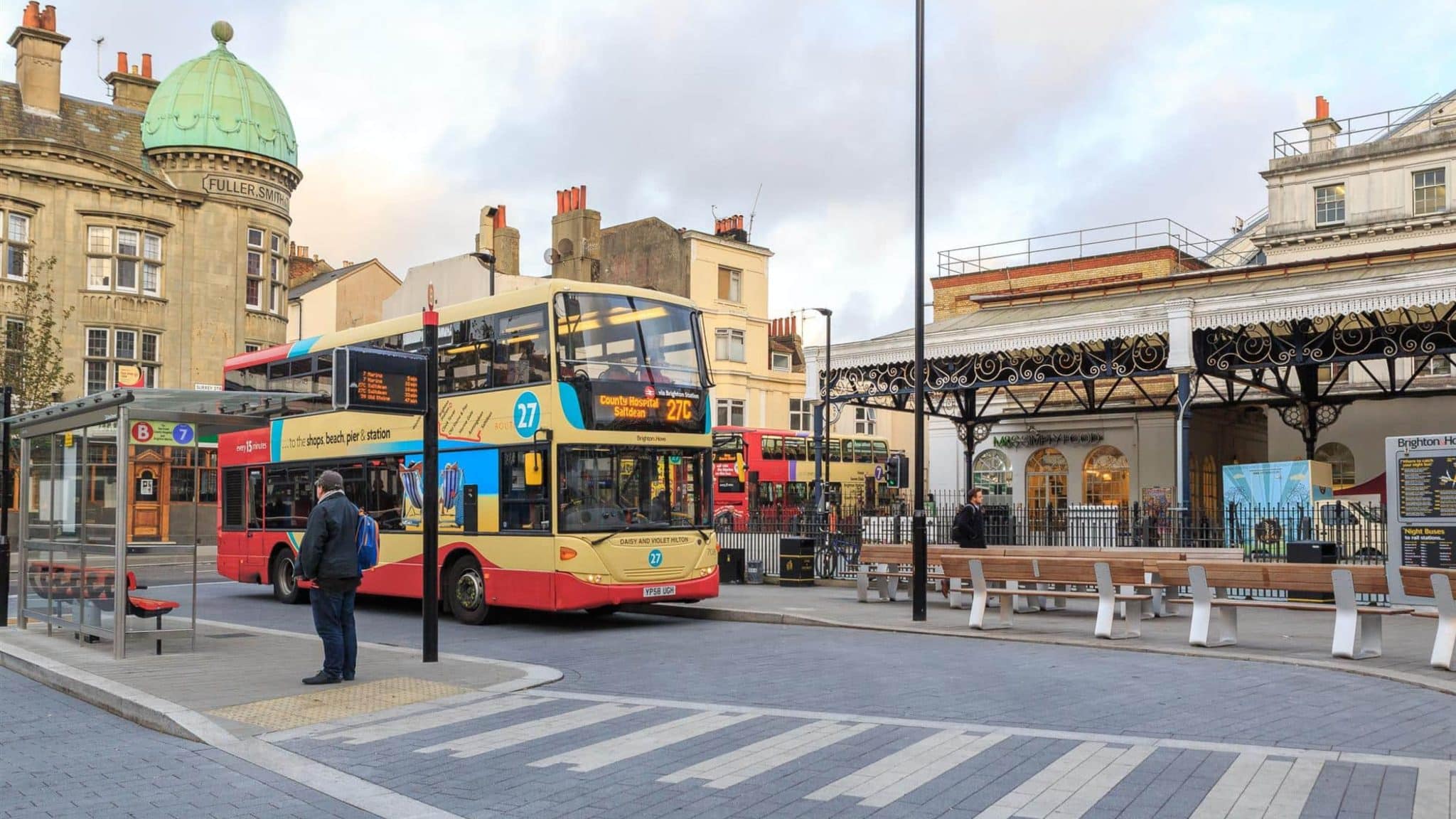
The traffic category of a road or a bus route is a key factor for the selection of suitable types of concrete paving, especially concrete block paving and mortar. However, to deliver robust, high-performance concrete paving, the whole system – from the bound surface course at the top, down to the sub base below – must be specified and installed correctly.

The traffic categories for bound paving start at one for pedestrian only applications and go through to category nine for an area that is trafficked by a high number of commercial vehicles. The categories are outlined in the table below.
| Traffic category | Standard axles per day | Typical applications |
|---|---|---|
| 1 | 0 | Pedestrian-only areas, including domestic applications. |
| 2 | 0 | Pedestrian and cycle areas, domestic driveways. ᴮ) |
| 3 | 0 | Small car parks subject to car, light van and motorcycle access. |
| 4 | 1 | Urban footways with no planned vehicular overrun. ᴬ) Pedestrian areas used by light commercial vehicles, emergency vehicles and maintenance vehicles. |
| 5 | ≤7 | Pedestrian areas subjected to occasional overrun of commercial vehicles. Car parks receiving occasional commercial vehicular traffic. |
| 6 | ≤70 | Adopted highways and commercial/industrial developments used by a moderate number of commercial vehicles. Pedestrian areas subjected to regular overrun of commercial vehicles. Industrial premises. Petrol station forecourts. |
| 7 | ≤350 | Adopted highways and commercial/industrial developments used by a high number of commercial vehicles. |
| 8* | ≤1400 | As above |
| 9* | ≤4000 | As above |
| ᴬ) Where a pavement is to be used for occasional events or heavy goods vehicle loading, the pavement should be designed for that loading. ᴮ) For bound construction, domestic driveways should be designed according to traffic category 3. |
||
Roads and bus routes are typically classed as either traffic category six or seven. Where the expected traffic takes the road or bus route into categories eight or nine, the manufacturer of the paving blocks should be contacted for technical advice.
Understanding the traffic category ensures that the whole system is specified to accommodate the loading demands of roads and bus routes.
In this blog, we will look at some of the critical design factors affecting category 6 and 7 roads and bus routes. For more comprehensive information, specifiers should always refer to BS 7533-101:2021 ‘Pavements constructed with clay, concrete or natural stone paving units – Code of practice for the structural design of pavements using modular paving units’.
When designing bound concrete paving and mortar types for roads and bus routes, a subgrade assessment should always be carried out. The design California Bearing Ratio (CBR) should be assessed to determine the subgrade strength in accordance with BS 1377-4. If the CBR of the subgrade is below 2%, it should be improved or replaced before construction. This blog deals with CBRs of 3% or better.
Traffic categories six and seven affect several areas when considering a suitable specification for concrete paving blocks of roads and bus routes.
The standard BS 7533-101:2021 refers to two methods of bound installation for concrete paving: System A and System B. Only a bound System B is suitable for traffic categories six and seven.
Bound system B refers to a bound surface course bonded to a concrete base. This is where a tensile adhesion bond of not less than two MPa exists between all layers, connecting the surface unit with the base. To enable the best possible adhesion bond between paving units and mortar, paving units should be thoroughly cleaned prior to installation.
The base course design thickness is dependent upon the loading and use of the concrete paving application. It starts at 100mm for pedestrian areas. For roads and bus routes, a thickness of 150mm is required.
| Traffic category | Bound system B - Concrete base depth |
|---|---|
| 6 | 150mm |
| 7 | 150mm |
For pedestrian areas, concrete block thickness can be as little as 50mm. However, this rises to 60mm for category six and 80mm for category seven roads or bus routes.
| Traffic category | Minimum concrete block thickness |
|---|---|
| 6 | 60mm |
| 7 | 80mm |
Where an area is to receive vehicular traffic, there are recommended laying patterns to maximise stability of the bound surface as laid out in the following table.
Recommended maximum traffic categories for typical laying patterns:
| Traffic category - Bound surface course | Laying Pattern |
|---|---|
| 5 | Basketweave |
| 5 | Stack bond |
| 7 | 45 degree herringbone |
| 7 | 90 degree herringbone |
| 7 | 45 degree stretcher bond |
| 7 | 90 degree stretcher bond |
As roads and bus routes are category 6 and above, basketweave and stack bond patterns should not be used.
Several materials should be used in conjunction with bound surface construction.

Proprietary bedding mortar should be produced in accordance with the characteristics in the table below. This material may be assumed to be non-frost susceptible.
| Characteristics | Performance | Performance |
|---|---|---|
| Type 25 bedding mortar | Type 35 bedding mortar | |
| Compressive strength ᴬ) | ≥25 MPa | ≥35 MPa |
| Flexural strength ᴬ) | ≥3.5 MPa | ≥4.5 MPa |
| Modulus of elasticity ᴮ) | (15000 ± 3500) MPa | (18000 ± 3500) MPa |
| Shrinkage ᶜ) | ≤0.09% | ≤0.09% |
| Permeability ᴰ) | ≥5 x 10⁻⁵ m/s | ≥5 x 10⁻⁵ m/s |
| ᴬ) Measured in accordance with BS EN 13892-2 after 28 days. ᴮ) Measured in accordance with BS EN 13412 after 28 days. ᶜ) Measured in accordance with BS EN 12617-4:2002, Clause 6 after 56 days with curing in accordance with BS EN 12617-4:2002,A.1.2. ᴰ) Measured in accordance with BS EN 12697-19. Note: In all situations, Type 25 mortar may be replaced with Type 35 mortar. Note: Tests in BS EN 13892-2 for compressive and flexural strength and BS EN 13412 for modulus of elasticity need to be made concurrency in the same testing facility, which has UKAS accreditation or equivalent for one or more of the tests. Note: Factory production control testing may be carried out in the producer's own laboratory. |
||
Bonding mortar is necessary in the Bound system B. It is a mix of cementitious binder and fine aggregate; it should not contain chemical admixtures which could reduce the water permeability of the cured bonding layer.
It should be applied as a liquid slurry with a thick creamy consistency to the underside of the blocks to provide better adhesion with the bedding mortar.
The maximum aggregate particle size should not be greater than 40% of the joint width. The material used for jointing should be a cementitious slurry grout conforming to the following table.
| Characteristics | Performance | Performance |
|---|---|---|
| Type 25 jointing mortar | Type 40 jointing mortar | |
| Compressive strength ᴬ) | ≥25 MPa | ≥40 MPa |
| Flexural strength ᴬ) | ≥3.5 MPa | ≥6 MPa |
| Modulus of elasticity ᴮ) | (18000 ± 4000) MPa | (20000 ± 4000) MPa |
| Shrinkage ᶜ) | ≤0.15% | ≤0.15% |
| Adhesive Strength ᴰ) | ≥1.0 MPa | ≥1.5 MPa |
| Frost/salt resistance class ᴱ) | ≤1500g/m2 | ≤1500g/m2 |
| ᴬ) Measured in accordance with BS EN 13892-2 after 28 days. ᴮ) Measured in accordance with BS EN 13412 after 28 days. ᶜ) Measured in accordance with BS EN 12617-4:2002, Clause 6 after 56 days with curing in accordance with BS EN 12617-4:2002,A.1.2. ᴰ) Measured in accordance with BS EN 13892-8 after 28 days. ᴱ) Measured in accordance with CEN/TS 12390-90 after 28 cycles (CDF Test) Note: Factory production control testing may be carried out in the producer’s own laboratory. |
||
Note: A type 40 jointing mortar should be used in traffic categories four to seven, which includes roads and bus routes. It may also be used in traffic categories one to three.
When specifying concrete paving for roads and bus routes, ensuring that the correct concrete depth, block thickness, laying pattern and mortars have been chosen can be challenging. Consulting with a paving manufacturer with years of experience supplying product to similar projects is a great way to get reassurance that your specification will deliver the results you expect.
Proprietary bedding, bonding and jointing mortars
Proprietary bedding and jointing mortars are now used frequently. There are numerous manufacturers of these products which meet the requirements of BS 7533.
Always follow the instructions provided by the mortar manufacturer.
Can permeable concrete paving be specified for roads and bus routes?
Yes, permeable paving can be used for roads and bus routes. The surface water filters through the joints between the permeable paving blocks into the sub base aggregate below. This is rather than running off an impermeable surface into gullies that direct it into a drainage system.
Permeable paving can form part of Sustainable Drainage Systems (SuDS). For more information on how permeable paving can support roads and bus routes, read our blog on traffic categories for permeable paving.
Where can I find out more about concrete paving solutions for roads and bus routes?
Tobermore has a range of non-permeable pavers and permeable pavers that are suitable for use with roads and bus routes.
Craig McBride, Tobermore’s Technical and Product Training Manager, comments:
“Whether your project requires a bound concrete paving or permeable paving solution, we have a range of concrete blocks that can deliver robust and attractive roads and bus routes. For a durable high-performance paved surface, we recognise the importance of ensuring the bedding, jointing and sub base materials are correctly specified and installed. We support our customers through the provision of services that help with the specification of the sub base. Our experienced technical team are also on hand with advice and guidance on material choice and best installation practices.”
If you are looking for a concrete paving solution for roads or bus routes on your project, contact our technical team to answer your questions.

Simply enter a few project details and you’ll instantly receive preliminary sub base design drawings to use for your initial design and project pack.