 Block Paving
 Paving Slabs
 Permeable Paving
 Retaining Walls
 Facing Bricks & Walling
 Kerbs & Edging
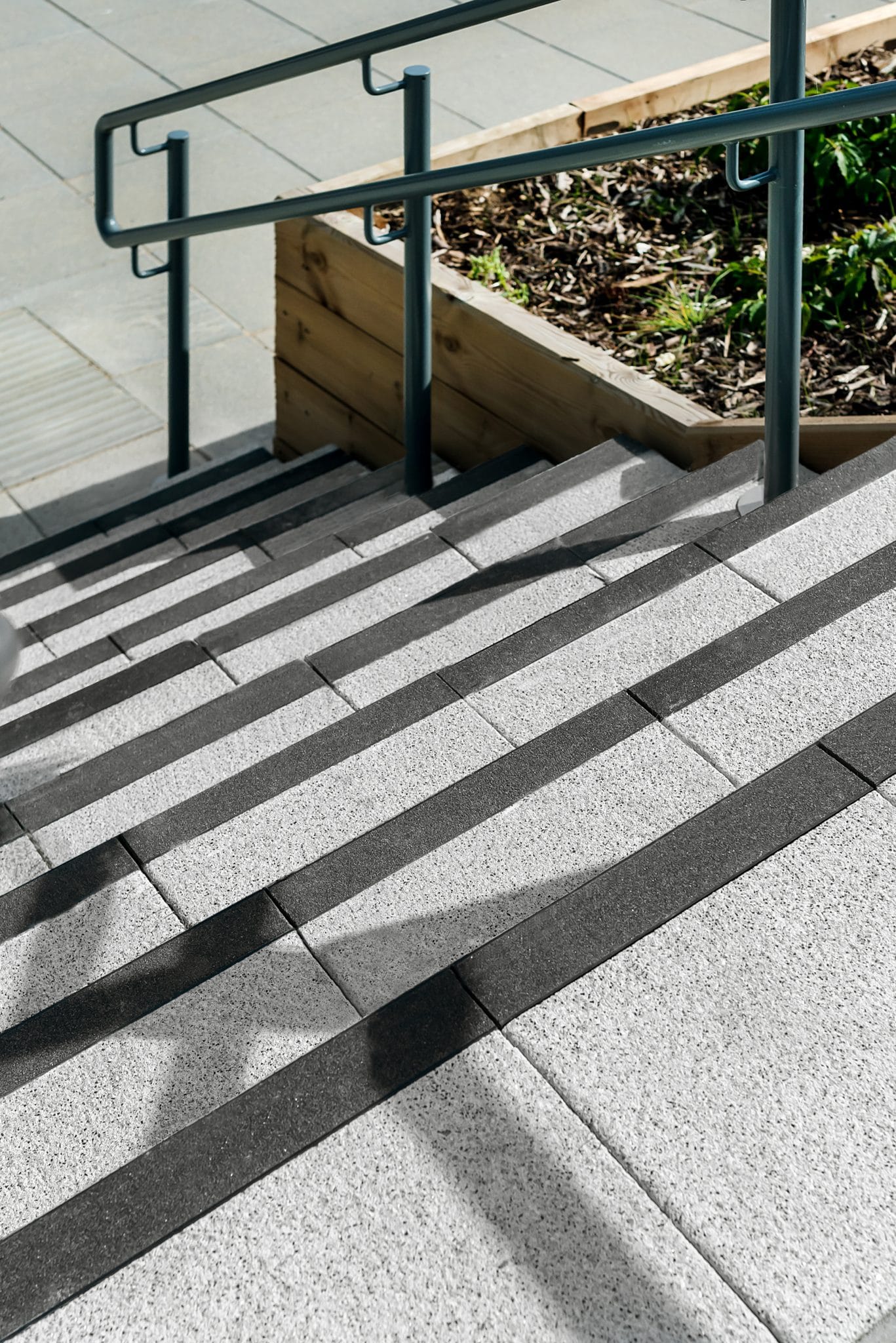 Steps
Steps
0 products added
-
How do I cut paving blocks?
Block pavers should be cut using a masonry saw or bench mounted water-cooled power saw to create the best appearance. Individual blocks should not be cut to less than a quarter of the original size. The use of inboard cutting should be used to ensure structural performance.
-
What traffic loading can Artro accommodate?
Artro is suitable for pedestrians, cars and commercial vehicles when the sub base has been designed correctly by an engineer to BS 7533.
-
Are there guidelines regarding the size of cut blocks?
BS 7533 states that a cut block should not be smaller than a quarter of a full-size block. Blocks should be cut using a masonry saw with water suppressant or bench mounted water-cooled power saw to ensure the best appearance of this block, regardless of what laying pattern is chosen by the installer.
Inboard cutting should be used to ensure individual blocks are not cut less than a quarter of the original size. Inboard cutting ensures structural performance by utilising larger cuts as opposed to smaller ones, particularly at the border or edge of a paved space. For installation guides and specification sheets for all our products, please access the downloads section of our website.
-
Should I seal Tobermore block paving?
Sealing paving products is a matter of personal choice. Applying sealant to a paved surface can further enhance its colour, protect against the penetration of oil and other stains, reduce weed and algae growth, and stabilise the sand in the joints. However, paving sealants can sometimes change the colour of paving slabs and may affect the slip resistance of the surface. We recommend receiving guidance from whichever company you choose as your supplier of sealant. For more information on Tobermore block paving, please access our dedicated block paving landing page.
-
How do I cut Tobermore paving blocks?
Paving blocks should be cut using a masonry saw with water suppressant or bench mounted water-cooled power saw to ensure the best appearance of this block, regardless of what laying pattern is chosen by the installer. Inboard cutting should be used to ensure individual blocks are not cut less than a quarter of the original size. Inboard cutting ensures structural performance by utilising larger cuts as opposed to smaller ones, particularly at the border or edge of a paved space. Health and safety guidelines should be followed at all times. For more detailed technical information on our block paving solutions, please access our product specification sheets.
-
How wide are the joints in Tobermore block paving?
The joints in Tobermore block paving are approximately 2mm. Most concrete block pavers have an integral spacer nib which automatically creates the joint width when the blocks are laid hand tight.
-
What is the recommended bedding/laying course for Tobermore block paving?
Concrete block paving is generally installed unbound on a bed of 30mm sharp sand and jointed with kiln dried sand. For full details on the laying course and jointing requirements, please consult BS 7533-102:2025 https://shop.bsigroup.com/
Concrete block paving can also be laid bound, although this is less common. Laid bound means laid on a bed of cement mortar with mortar joints. For full details on bedding and jointing requirements, please consult BS 7533-102:2025 https://shop.bsigroup.com/
For more information on the benefits of bound and unbound installation, have a look at our blog on the key benefits of bound and unbound paving.
-
Where can I find installation guidelines for Tobermore block paving?
Concrete block paving should be installed to BS 7533-102:2025 Code of Practice for Installation of pavements using modular paving units. This British Standard can be purchased here. Alternatively, you can find simplified block paving installation guidelines in the downloads section of our website.